Co-director group
arnoldo.frigessi@medisin.uio.no Co-Director
University of OsloArnoldo Frigessi has been Professor in Statistics at the Oslo Center for Biostatistics and Epidemiology, University of Oslo, since 2003. He previously worked at the Oslo University Hospital, the Norwegian Computing Centre, the University of Roma III, the University of Venice and for IAC at the Italian Research Council in Rome. In the last years he has led the Oslo Center for Biostatistics and Epidemiology (OCBE) at the Faculty of Medicine and the centre for research-based innovation BigInsight, developing model based machine learning methodologies for big data. Mathematician by training, he has supervised more than 40 PhD students and have guided many postdocs. Arnoldo develops stochastic models that try to carefully represent fundamental principles, basic dynamics, intricate patterns of dependence and mechanisms of the system to be understood or predicted. His inference is usually based on computationally intensive stochastic algorithms, and he prefers the Bayesian approach, while many of my projects are also likelihood based.
|
glad@math.uio.no Centre Director
University of Oslo, Department of MathematicsIngrid Glad is a professor of statistics and data science at the University of Oslo. Apart from her role as a co-director at Integreat, she is also a co-director for the center for research based innovation BigInsight and Chair of the Abel Board for the period 2022-2026. Ingrid develops statistical and machine learning methodology motivated by problems originating in the life sciences and their data intensive disciplines. She is particularly occupied with high-dimensional regression and statistical and machine learning methods for large data, such as methods for detecting anomalies and changes in high-dimensional data streams. She has also worked with nonparametric curve estimation, hierarchical modelling and Bayesian inference. Her work is typically applied to data from genomics/molecular biology, and to sensor data streams from maritime industry, for example, to prevent shipping disasters.
|
benjamin.ricaud@uit.no Co-DirectorAssociate Professor, Machine Learning
UiT The Arctic University of NorwayBio upcoming
|
liljao@ifi.uio.no Co-Director
University of Oslo, Department of InformaticsLilja Øvrelid is a professor and group leader for the Language Technology Group (LTG) within the section for Machine Learning at the Department of Informatics, University of Oslo. She is also the head of the study program in Language Technology for Bachelor and Master-level students. Her research focuses on various types of syntactic and semantic processing of natural language text using machine learning methods, such as dependency parsing, negation/speculation analysis and sentiment analysis. This involves both the development of resources for machine learning, the development of systems which automate syntactic and semantic analysis of language, as well as the application of these systems in downstream tasks.
|
martingi@ifi.uio.no Co-director
University of Oslo, Department of InformaticsMartin Giese is professor of analytical solutions and reasoning at the University of Oslo and was leader in 2018 of the SIRIUS strands for Knowledge Representation and Data Science. He has a PhD in Computer Science from Karlsruhe University, and has spent time as a researcher at Chalmers University in Gothenburg and the Austrian Academy of Sciences. For the past 10 years, he has been working in projects to bring ontologies and other knowledge representation techniques to applications in industry and the public sector. As a researcher, he is interested in various aspects of applied logics and formal methods, including semantic web/semantic technologies, tableau-based proof systems, first-order logic, equality reasoning in tableaux, description logics, integration of interactive and automated theorem proving, and implementation of proof systems. |
Published June 17, 2024 12:24 PM
- Last modified Sep. 21, 2026 2:02 PM

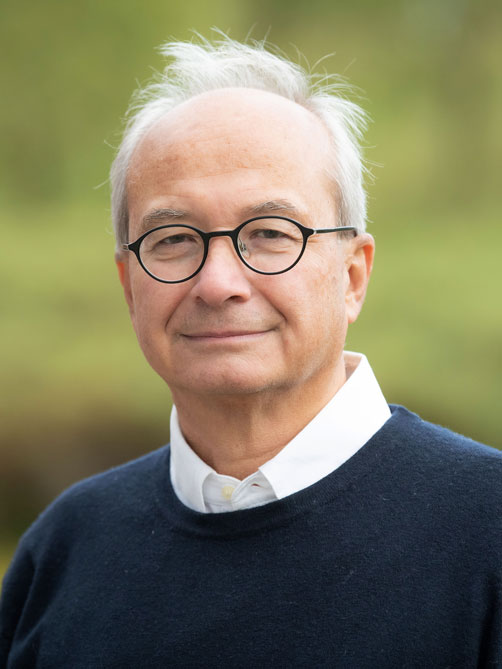 Arnoldo Frigessi
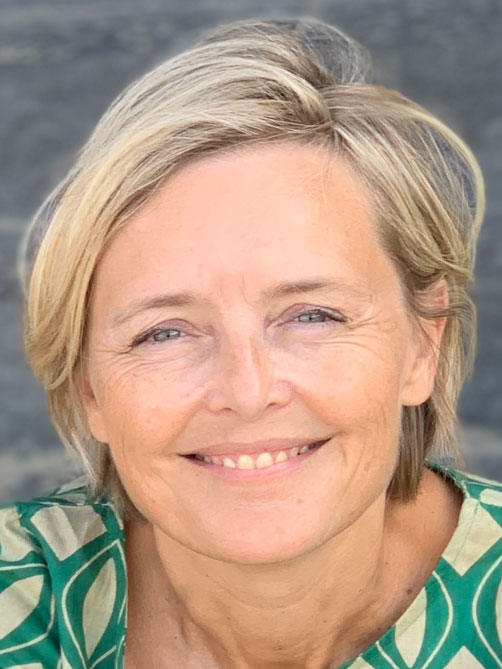 Ingrid Glad
 Lilja Øvrelid
 M
M