
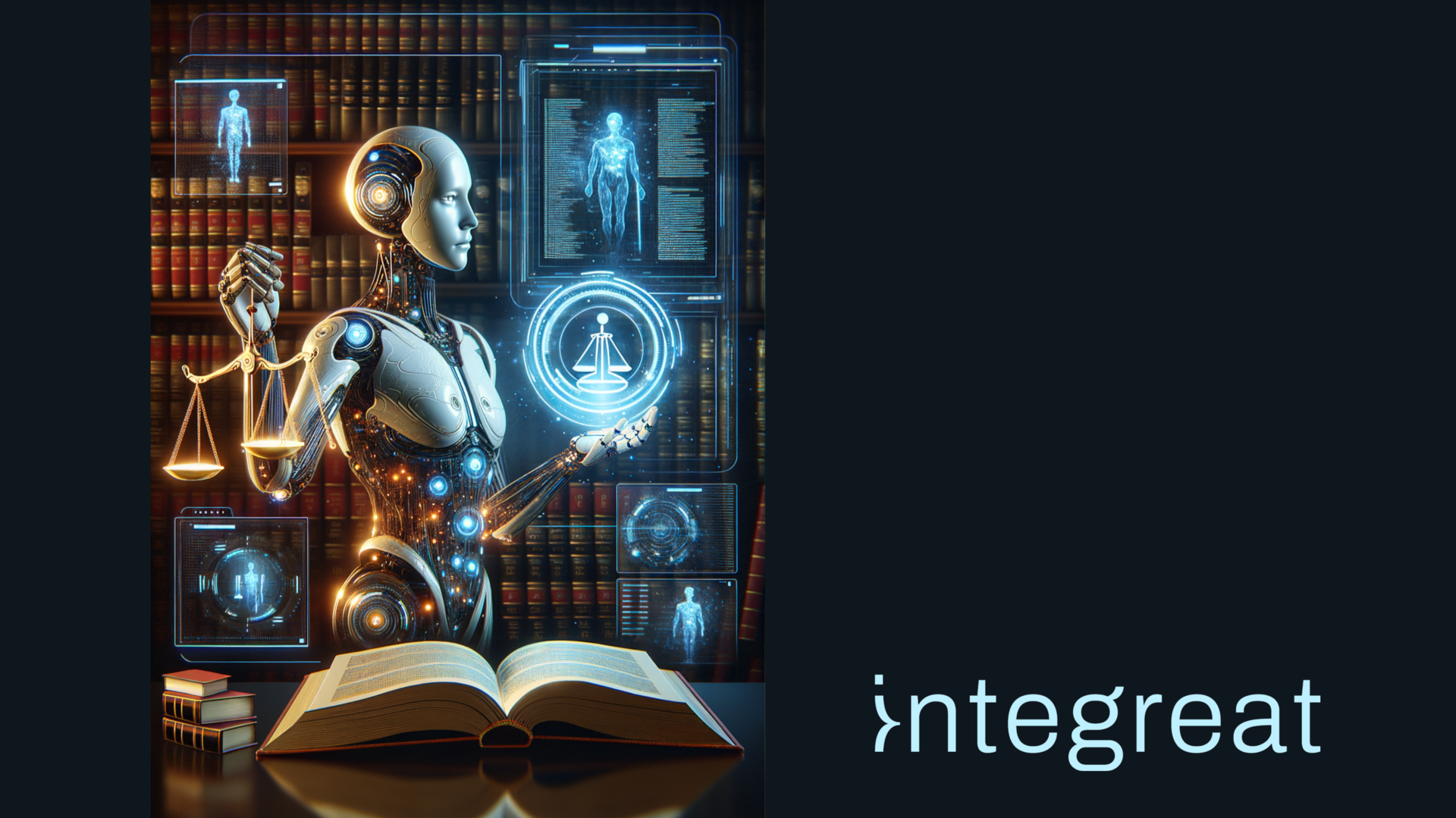
Description
The workshop gathers representatives of academia, civil society and expert communities working with Artificial Intelligence and/or war crimes databases and archives. Workshop participants will learn about the recent advances in generative AI and the new possibilities offered by these AI tools for generating and extracting information from text, audio, images and videos. The workshop is the occasion to discuss the specificities of war crime related data and test AI models on these data.
During the workshop, participants will test AI models in practice helped by the teaching team from Integreat. Mixed group with participants from diverse backgrounds will work on applying AI to archive material (either online data, data provided by NGOs or their own data).
Expected outcome
Through individual tasks and teamwork in mixed interdisciplinary groups, the participants will network, share their professional experiences and build a small AI-aware community. This community will specialise in using Generative AI to advance the effective systematisation, preservation, presentation and analysis of war crimes archives. Participants will get access to code and tools shown during the workshop and can use them to make their own archives/databases AI-enabled. The code will be available on the AI for Justice Github repository.
Programme
Day 1, 11 June
| 09.00 | Welcome & Introduction by the organisers |
| 09.10 |
Short overview of Generative AI and potential applications to War Crimes ArchivingAssociate Professor Benjamin Ricaud, UiT The Arctic University of Norway |
| 09.30 |
Role of International Institutions in Documentation of Core International CrimesInternational Court NGO Representative (to be confirmed) |
| 09.50 | Coffee break |
| 10.00 |
Ukraine War Crimes Trial DatabaseAssociate Professor Megumi Ochi, Ritsumeikan University, Japan |
| 10.20 |
Short presentations of own databases and participants’ experiences with digital archiving and Artificial Intelligence (AI) |
| 11.00 |
Digital Evidence and OSINT in Documenting War Crimes in UkraineMaryna Slobodyanuk, Coordinator for Training and Strategic Projects, NGO Truth Hounds, Ukraine |
| 11.20 | Lunch |
| 12.30 |
Retrieval Augmented Generation and chatbots, new paradigm for archiving and retrieving documentsPhD Fellow Daniel Kaiser, UiT The Arctic University of Norway |
| 12.50 |
Practice part 1: Retrieval Augmented Generation and chatbotsGoal: build a prototype to archive data, understand how it works and the limits. Reflect on the limitations. Setting up a RAG system (with or without coding skills), step by step tutorial with participants. Application to different data, participants work on some data they chose. Open discussion about the possibilities and limits. |
| 14.00 |
The Role and Legal Framework of OSINT in the Collection and Analysis of Digital Evidence in the Ukrainian caseMarie Curie Fellow, Associate Professor Kateryna Latysh, Yaroslav Mudryi National Law University, Ukraine; Senior Lecturer, Vilnius University, Lithuania |
| 14.20 | Coffee break |
| 14.40 |
Practice part 2: AI for video, images and audioGoal: get to know AI models which extract information from video, audio and images. Practice with open-source models from Huggingface.co, WHISPER, CLIP and others, convert speech to text, image to text and produce video summaries. Application to different data, participants work on some data they chose. Open discussion about the possibilities and limits. |
| 16.00 | End of the first day |
| 17.00 | Pizzas |
Day 2, 12 June
| 09.00 |
MSCA Project ‘Hybrid Cyber Warfare and Common Security in Europe’, Open-Access Book on OSINT and digital investigation of core international crimesMarie Curie Postdoctoral Fellow Artem Galushko, UiT The Arctic University of Norway |
| 09.20 |
Managing databases and digital archives: challenges and opportunities in UkraineValentyna Soloviova, Analytical Department Manager, NGO Truth Hounds, Ukraine |
| 09.40 | Coffee break |
| 10.00 |
Practice part 3: Understanding the AI representation of dataGoal: understand how an AI model represents the data and organizes it. Understand the imperfect representation of AI models and the risks of relying too much on them. |
| 11.30 | Lunch |
| 12.30 |
Practice part 4: Further developing AI for archivingOpen session for the participants’ projects, combining the AI seen in part 1, 2, and 3. Participants work on real-world archive data in teams, developing further a RAG system or some data analysis. The teaching team assists the teams in their projects. |
| 14.00 | Break & small walk around the campus |
| 15.00 | Group Presentations and Feedback from Trainers/Group Leaders |
| 15.45 | Coffee break |
| 16.00 | Final Discussion and Closing |
Registration
Registration to the workshop is required.
Registration form (30 May)
Participants should have either
- some programming background,
- experience with databases,
- or a knowledge of or an interest in the process of war crime archiving and investigations.
Practical information
- Lunch will be served to registered attendees.
- Streaming will be available for attendees joining online.
Points of contact
- Organisers: Associate Professor Benjamin Ricaud, benjamin.ricaud@uit.no and Postdoctoral Fellow Artem Galushko, artem.galushko@uit.no
- Administrative questions: Integreat administration, admin@integreat.no